
Investor Ready Checklist: 30 Days Before You Raise
Being investor ready means you can answer “send me more” within the hour. Use this four-week checklist to prepare, target, send and track before you raise.
 GraphicsGround teamInvestor decks, built with you, backed for the raise.
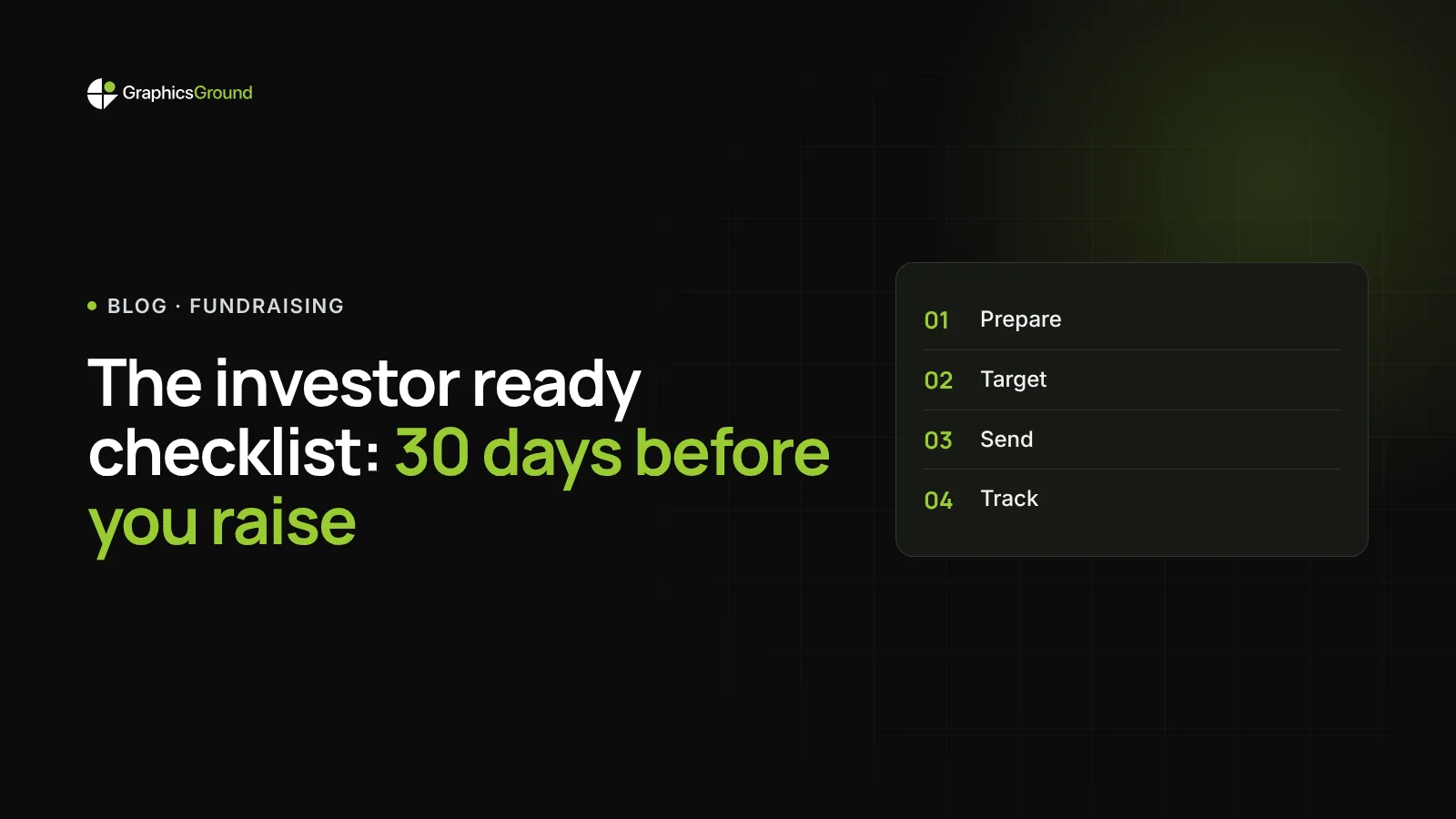
You are investor ready when an investor can reply “send me more” tonight and you can send the deck, a one-page summary and your numbers within the hour. That takes about 30 days of work done in a fixed order: prepare your materials, build a list of investors who fit, send in batches, then track the replies and adjust. This checklist walks through each week.
Most founders do it the other way round. They finish the deck, email everyone they can find in the same week, and fix the deck based on whoever replies. A month later their best-fit investors have seen a version the founder would not send today.
Key takeaways
- Ready first, then send. You get one first impression with each investor.
- One job per week: prepare, target, send, track. Always in that order.
- Each week ends with one check. If you cannot pass it, stay in that week.
- A round rarely closes in 30 days. This is about starting right.
Send first or ready first
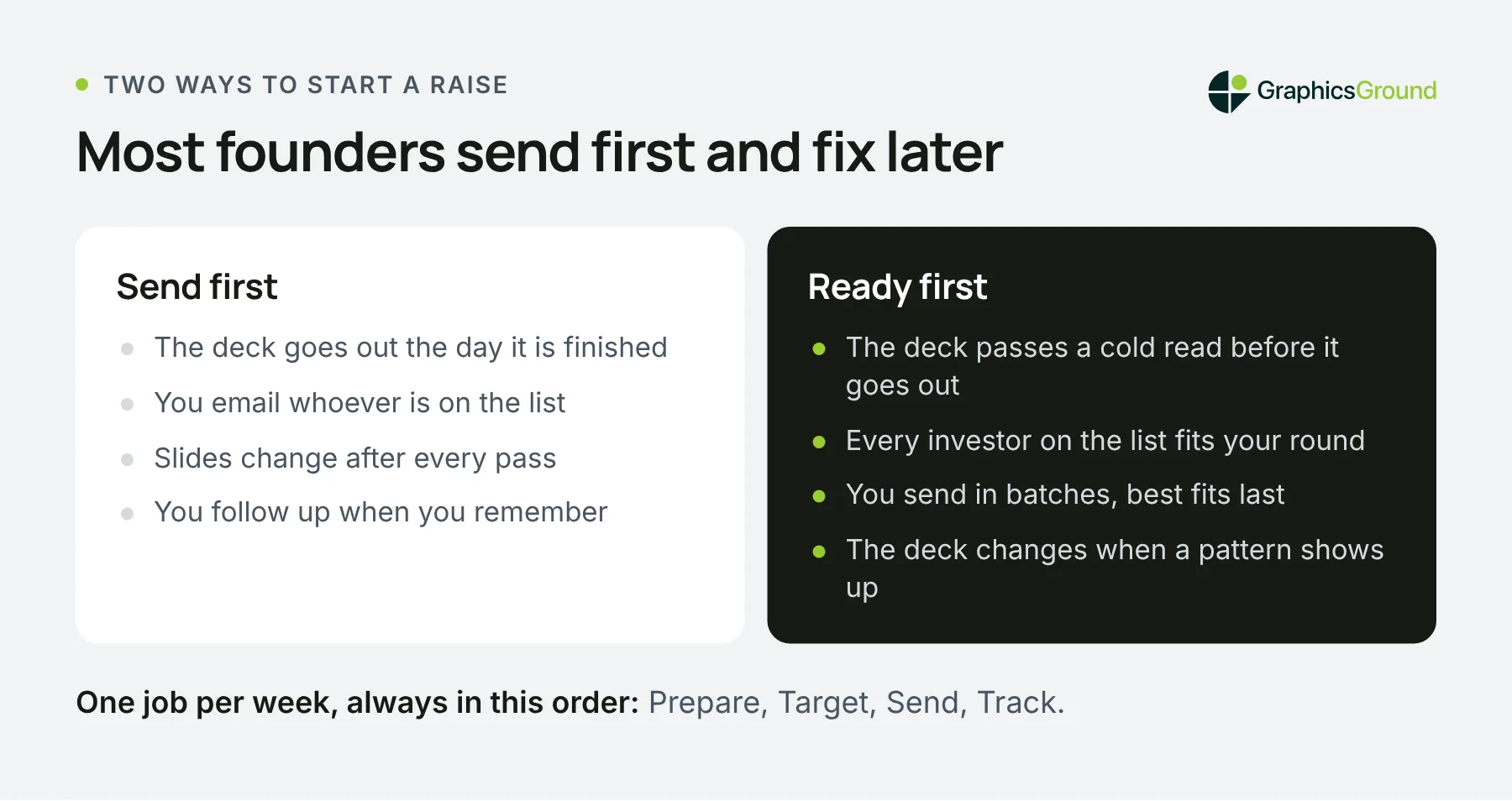
| Send first | Ready first |
|---|---|
| The deck goes out the day it is finished | The deck passes a cold read before it goes out |
| You email whoever is on the list | Every investor on the list fits your round |
| Slides change after every pass | The deck changes when a pattern shows up |
| You follow up when you remember | Every reply and question goes in a tracker |
| You do not know why it is not working | You can say where the raise is getting stuck |
Week 1: Prepare
Your job: get everything ready before the first email goes out.
- Write your round in one sentence. How much you are raising, the type of round, and what the money gets you to.
- Write your one-line pitch. What you do, who it is for, and why now. If someone outside your industry cannot repeat it, rewrite it.
- Finish the deck you will send. It has to work without you in the room, because most investors read it alone first.
- Run the cold read test. Give the deck to someone who does not know the company. Three minutes, no explaining. Then ask what you do and why it is worth backing.
- Write a one-page summary. See how to write an investor one-pager.
- Put your numbers in one sheet. Every number in the deck must match it.
- Build the data room. See our data room checklist.
- Answer the ten questions you least want to hear. Draft the answers now, not in the meeting.
Done when: an investor replies tonight with “send me more”, and you can send the deck, the summary and the numbers within an hour.
Watch out. Sending the deck early “just to test it”. You get one first impression with each investor. Do not spend it on a draft.
Week 2: Target
Your job: build a list of investors who fit, with a way in to each.
- Set your fit filter. Stage, sector, check size, geography. An investor has to pass all four.
- Build a long list of about 100 names. Start with who funded companies like yours.
- Cut it to 30 to 50. Remove anyone who does not invest at your stage, backs a direct competitor, or has not made a new investment in the past year.
- Name the person, not the fund. A general inbox is the slowest way in.
- Write one reason for each name. One true line to open your email with.
- Rank them A, B and C, and map a way in to each: a founder they backed, a shared contact, or cold.
- Write your outreach messages and set up a tracker with one row per investor.
Done when: you can name the next ten investors you will contact, why each one fits, and how you will reach them.
We go through the scoring in how to build an investor list for your seed round.
Week 3: Send
Your job: start conversations in batches, not all at once.
- Send a first batch of 10 to 15. Mostly B names, with a few A names. Your best fits hear from you once the pitch has had practice.
- Make the first two lines personal. Line one is your reason for writing to them. Line two is your one-line pitch.
- Keep the email under 120 words and share the deck as a link. See how to write a cold email to investors.
- Log every send the same day, including which version of the deck they got.
- Answer every reply within 24 hours. Investors read your speed as a sign of how you run the company.
- Write down every question they ask, in their words. It is the most useful data you will collect all month.
- Follow up within 24 hours of each meeting. See what to send after a pitch.
Done when: you have contacted at least 20 investors, and every one has a next step and a date in your tracker.
Week 4: Track
Your job: follow up, read the feedback, and adjust.
- Follow up with everyone who has not replied. Once after five to seven days, and once more a week later. Then move on.
- Give each follow-up something new. A customer win, a new number, a hire.
- Ask every no for one reason. One line is enough. Log it.
- Group the feedback by theme: market, traction, team, business model, terms.
- Apply the rule of three. One investor’s comment is an opinion. The same comment from three is a pattern. Change the deck for patterns.
- Plan the next 30 days: the next batch of names, and what changes in the message and the deck.
Done when: you can say, in one sentence, why investors are not saying yes yet.
Four numbers to check every Friday
| Number | How to count it | If it is low |
|---|---|---|
| Investors contacted | Your total so far | You are not sending enough to learn anything |
| Reply rate | Replies divided by investors contacted | The problem comes before the deck: the list or the message |
| Meeting rate | First meetings divided by investors contacted | The deck is not making the case on its own |
| Second meeting rate | Second meetings divided by first meetings | The story works on paper and loses people in the room |
These four tell you where to look before you change a single slide. We explain how to read them in why investors are not responding to your pitch deck.
Five signs you are not ready yet
- Everyone who reads your deck gives you different advice. One says cut it to ten slides, another says add more numbers.
- You cannot say in one sentence what this round gets you to. So investors cannot either.
- Your investor list came from a database, not from research. You know the names, but not who fits.
- You have sent the deck, and the replies stopped at “interesting”.
- You have changed the deck after every single pass. And it is no clearer than the first version.
If two or more sound familiar, get a second opinion before your next investor email.
What this looks like when it is done right
We worked with 196 Ventures on the deck for their fund. They had deep market knowledge and extensive data. The story was hard to follow in one read. We rebuilt the narrative and redesigned every slide in 10 days, and the fund went on to reach its $50M target. The preparation came before the outreach, not after it. The full story is in our case study.
It is also worth knowing how long the whole process takes. A DocSend study reported by TechCrunch found the average seed round took just over 12 weeks to close. The 30 days in this checklist are the first third. See how long it takes to raise a seed round.
Frequently asked questions
What does investor ready mean?
It means your materials, your investor list and your process are in place before you start outreach, so that any investor who shows interest gets a fast, complete and consistent answer.
Can I really get ready in 30 days?
If your company has something to show, yes. The 30 days are about organizing the proof you have. They will not create traction that does not exist.
What documents do I need to be investor ready?
A deck that reads alone, a one-page summary, a numbers sheet, a light data room, an investor list and your outreach messages.
Do I need a finished product to be investor ready?
Not at pre-seed. You need clear evidence of demand and an honest picture of what exists. See what investors look for in a pre-seed deck.
Should I start outreach while I am still preparing?
Ask for introductions in week two, because they take days to arrive. Hold the pitch itself until the deck has passed a cold read.
This article is the short version. The 30-Day Fundraising Checklist is the full guide, free, with every item to tick off and a score at the end. If you would like us to read your deck like an investor before you send it, send it to us.
What to prepare, send, and track in your first 30 days of raising. Free.
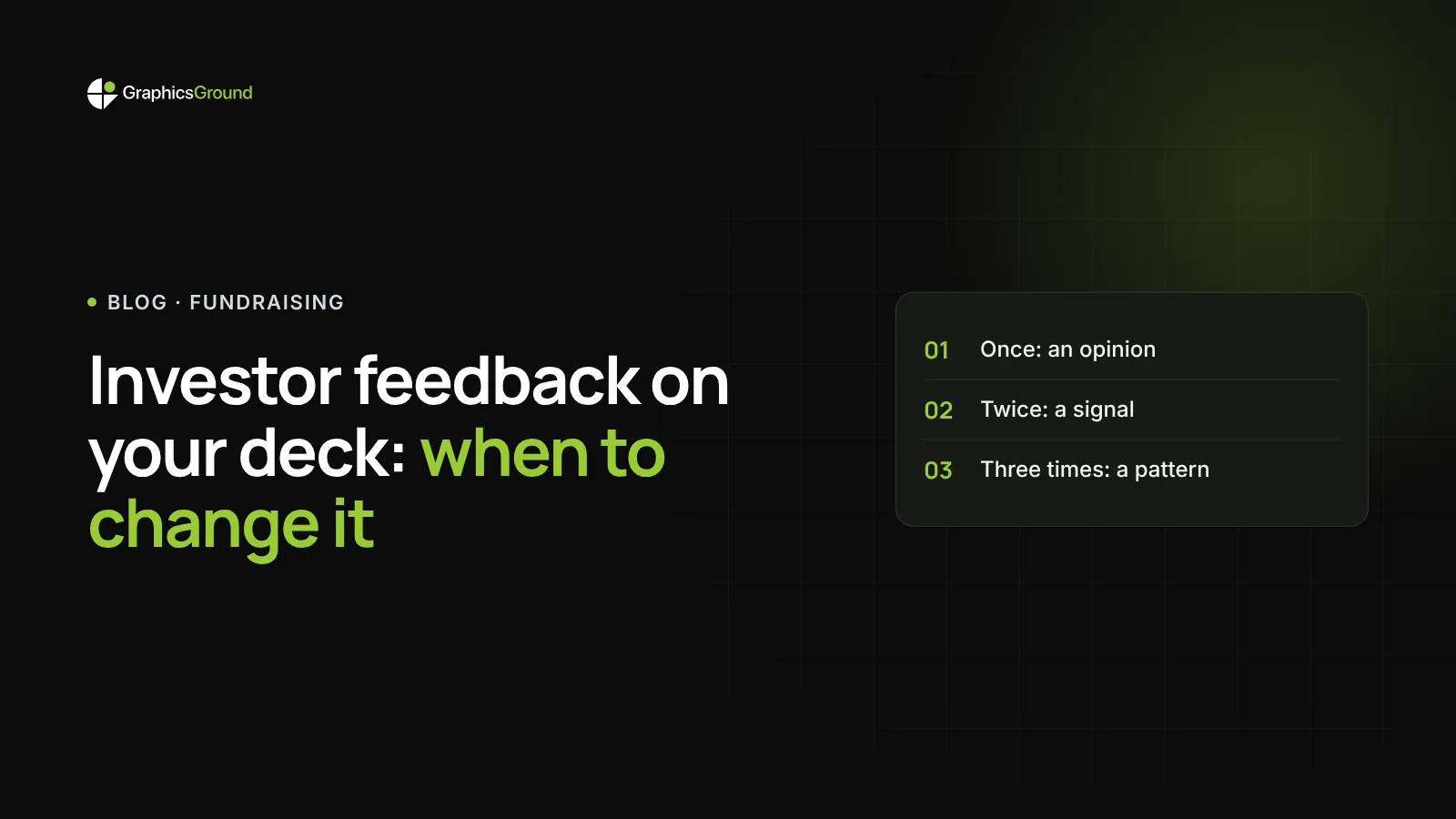
Investor Feedback on Your Pitch Deck: When to Change It
One investor’s comment is an opinion. The same comment from three is a pattern. Here is how to log investor feedback, read it, and decide what to change.
Read the article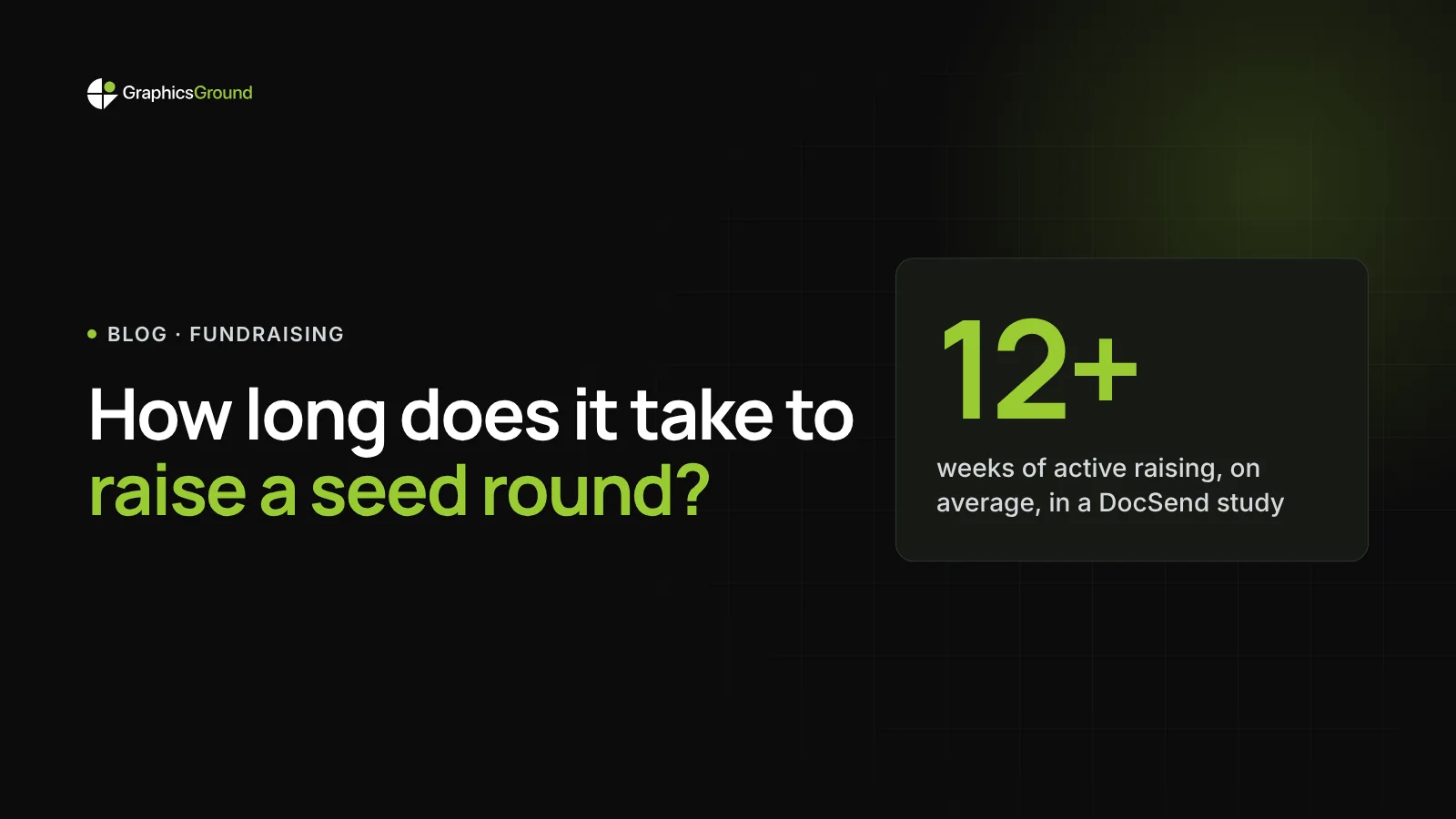
How Long Does It Take to Raise a Seed Round?
Plan for about three months of active fundraising for a seed round, plus preparation before and legal work after. Here is the timeline, week by week.
Read the article